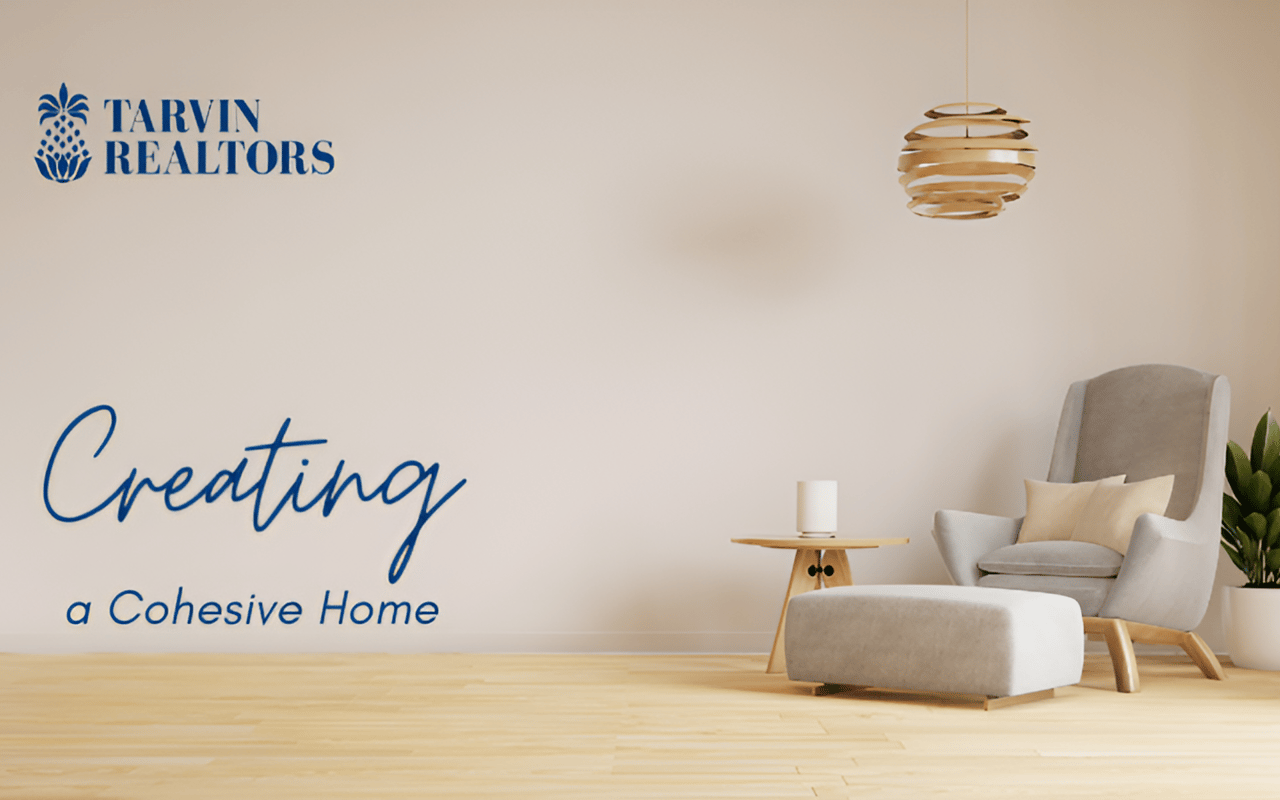
When decorating your home, a cohesive design can help each room flow seamlessly into the next. This plan will keep your home's design from looking too busy and disjointed. Each room's colors, decor, and furniture should be chosen so they complement one another as well as those elements in other rooms. While being tied together, each room has its own sense of identity, even when they have the same function. Multiple bathrooms, for example, should look different from one another but should share a cohesive design. Our agents suggest the following five tips to create a more cohesive house:
1. Identify Your Style
Start by choosing an interior design style you can incorporate throughout your home. Look at your home's architecture or the period in which it was built for a possible direction, such as modern, rustic, or farmhouse. Make sure it's one you love since this style will be used in every room. After picking out your style, you can choose furniture and other design elements that fit your chosen aesthetic in each room.
2. Start With a Neutral Paint Color
Choose a neutral yet bright paint color, like soft dove gray or off-white, that can work as a base in any room in your home. These hues can also be used in large furniture pieces and flooring and then brightened up with accent pieces in bold colors. You can also choose a main accent color that helps to tie rooms together with pieces such as a throw pillow or an area rug. With a neutral base color and a main accent color, your home's color palette will tie each room to the others. Add in a few complementary colors that vary from room to room, and you'll have a cohesive color scheme with the right amount of variation to avoid looking too repetitive or boring.
3. Incorporate Repetition as Well as Contrasting Elements
Keeping things like flooring, trims, and hardware similar between rooms can make your home flow well, especially if you have an open floor plan. Contrasting elements are also important so you don't overdo it and end up with rooms that look too similar. Different patterns, colors, and elements can give each room a unique look that still fits in with your overall design.
4. Choose Coordinated Flooring
A mix of many different flooring styles and colors can result in a disconnected look. This is true in any home, especially those with an open floor plan. Hardwood flooring in all your rooms will make your home look cohesive, and this type of flooring is highly functional in any room. If you'd prefer to use wall-to-wall carpeting in your bedrooms, make sure the colors coordinate.
5. Consider Sight Lines
One way to determine whether your home has a cohesive design is to stand in a room or hallway that gives you a view of multiple rooms. Do you notice colors, patterns, and other elements that tie the rooms together? If not, add some of these elements until you get a look you love. To get an additional perspective, take some photos of the view you're seeing since it's sometimes easier to spot things in a photo.
Contact us if you'd like to sell your home or are looking to buy and want to see Ridgewood homes for sale. Our knowledge and excellent reputation will make your experience an exceptional one!