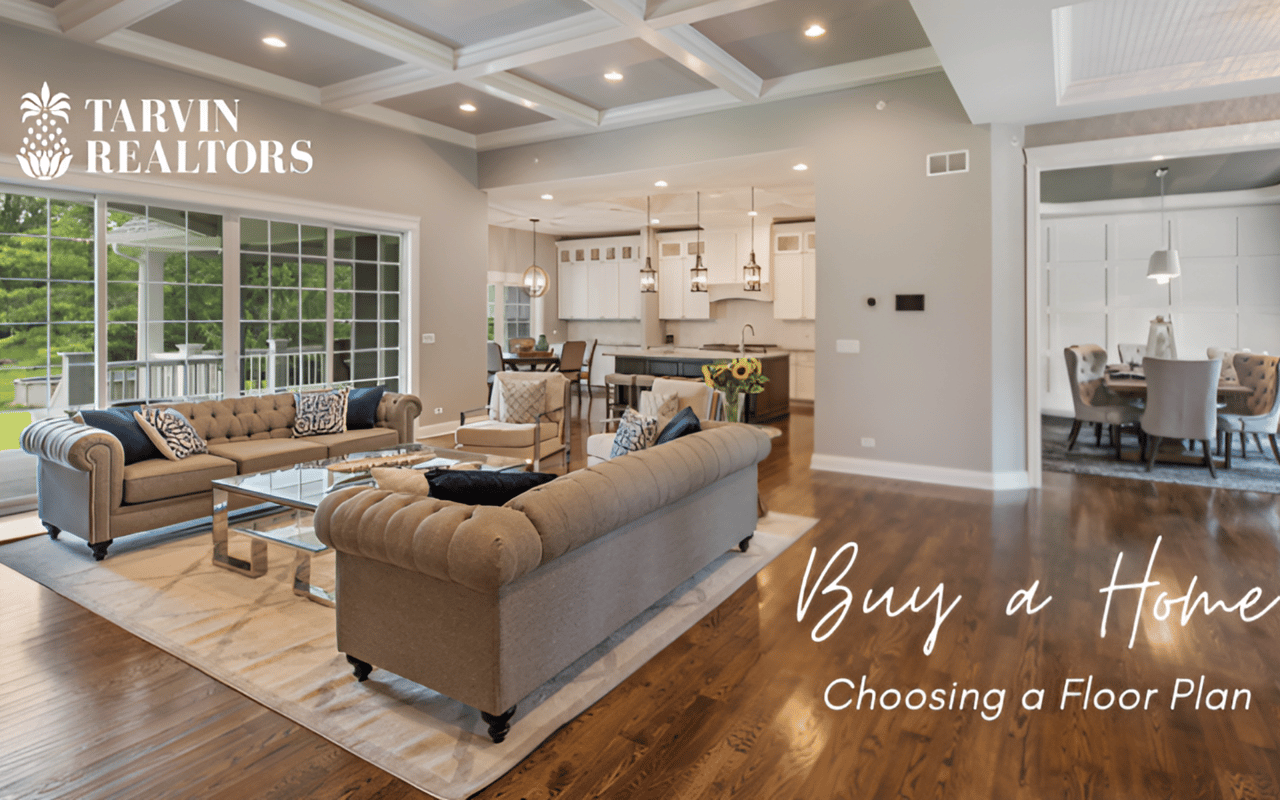
Times change and trends come and go. Most often, the changes are slow and subtle and go unnoticed by most homebuyers. And, as with all change, some remain firmly rooted within the "old" camp, while others embrace the new style. Such is the case when it comes to open and closed floor plans, and when it comes to philosophies, both sides are firmly entrenched in their positions.
Our agents know there are pros and cons of open floor plans, and we're happy to share some strategies that can make a closed floor plan work for your needs.Pros of an Open Floor Plan
Many Ridgewood homes for sale feature spacious, open floor plans. These designs facilitate a smooth, efficient flow of traffic through the home, which makes them ideal for entertaining. If you enjoy hosting family dinners, holiday celebrations, and parties, open floor plans facilitate a fluid, comfortable atmosphere that allows guests to move freely from room to room.
Open floor plans make the home feel larger and more inviting. They are also less restrictive, making them more convenient for homeowners with disabilities or limited mobility. Further, because there are fewer walls, it's easier to properly ventilate and fill each room with natural light.
Cons of an Open Floor Plan
If there is too much "stuff" in the home, open floor plans can make it look and feel like a warehouse. Moreover, if you opt for one decorating theme in the kitchen, another in the living room, and yet another in a sitting area, the styles can clash and create an incongruent, disjointed ambiance. This overlap can make the home feel cluttered and less welcoming.
Open floor plans also offer limited privacy, and activities within one room can disrupt activities in another. If one person is cooking in the kitchen, it can distract the person watching TV in the living room. Over time, the resulting overstimulation and lack of privacy can lead to family members spending less time in the open areas and more time enjoying the privacy of their bedrooms.
Making a Closed Floor Plan Work
Because of the drawbacks of open floor plans, many homeowners are turning to traditional closed floor plans, but they still want to enjoy the advantages open floor plans offer. This is possible with some thoughtful planning.
First, minimize the furniture within the room. Carefully consider the size and placement of every piece. This will maximize the amount of open space within the room without negatively impacting your ability to entertain guests or relax with family.
If the room has too few or too small windows, installing larger windows, such as a picture, bay, or bow window, can fill the room with natural light. Coupled with light-colored paints and strategically positioned window coverings, this can make even the smallest rooms feel spacious and inviting.
Finally, give each room a unique ambiance and appearance by choosing different furniture, paint colors, lighting schemes, and other features. This will clearly define the transitions from room to room and help create the optimal atmosphere for cooking, reading, watching TV, and other daily activities.
Contact us to learn more about the ways our clients maximize their use of traditional floor plans. It is our pleasure to show you up-to-date examples of both open and closed floor plans in the area so you can choose the one that's best for your needs.